Wondering if Alexandria could be your sweet spot for working in D.C. without sacrificing everyday ease? You are not alone. Many buyers and renters choose Alexandria for its historic charm, waterfront parks, and quick access to major job centers. In this guide, you will learn how commuting works, which neighborhoods fit different lifestyles, what costs to consider, and how to test-drive your routine before you commit. Let’s dive in.
Why Alexandria works for D.C. commuters
Alexandria puts you close to downtown D.C., the Pentagon, and other key employment hubs. You get a mix of historic streets, walkable blocks, and newer mixed-use areas. Many neighborhoods offer transit options that let you rely less on a car or combine modes.
There are trade-offs. Shorter commutes and walkable amenities often come with higher housing costs and limited parking. Living close to King Street and the waterfront adds convenience and energy, while the West End and other suburban pockets trade shorter rail access for more space and quieter streets.
Your commute options at a glance
Metro: Blue and Yellow Lines
Alexandria is served by the Blue and Yellow Metrorail lines, which connect you to downtown D.C., L’Enfant Plaza, Federal Triangle, and the Pentagon, with transfers to reach other job centers. For many routes, ride times from central Alexandria to core D.C. stations are often in the tens of minutes range. Frequency varies by time of day, and weekend maintenance can impact schedules. Always check current service before you go.
DASH and Metrobus service
DASH, Alexandria’s local bus network, links neighborhoods to Metro stations and major destinations. WMATA Metrobus adds connections to the Pentagon, downtown, and nearby office areas. Some employers run private shuttles, which can reduce your transfer time. If you plan to rely on buses for first and last mile links, review routes and service spans that match your work hours.
Commuter rail and Amtrak
Virginia Railway Express offers commuter rail options into Union Station during weekday peak periods. Amtrak also serves the region for intercity trips. These trains can be a strong alternative if your office is near Union Station or you value a seated ride. Confirm current stops, schedules, and fare options before making this your daily plan.
Driving and express lanes
Major routes include I-395, I-495, and U.S. 1. Drive times can vary a lot during rush hour due to congestion. Express toll lanes and HOV rules often shape your strategy, and an E-ZPass is typically required for HOT lanes. Factor tolls, parking, and variability when you compare driving with transit.
Biking, walking, and water taxi
If you prefer active options, Alexandria’s waterfront and the Mount Vernon Trail make biking a realistic choice for some commuters. Capital Bikeshare and e-scooters add flexibility for short hops to stations or offices. Seasonal water taxis connect the Alexandria waterfront with parts of the D.C. waterfront and National Harbor. Service levels change by season, so confirm schedules if you plan to ride regularly.
Neighborhoods through a commuter lens
Old Town and King Street corridor
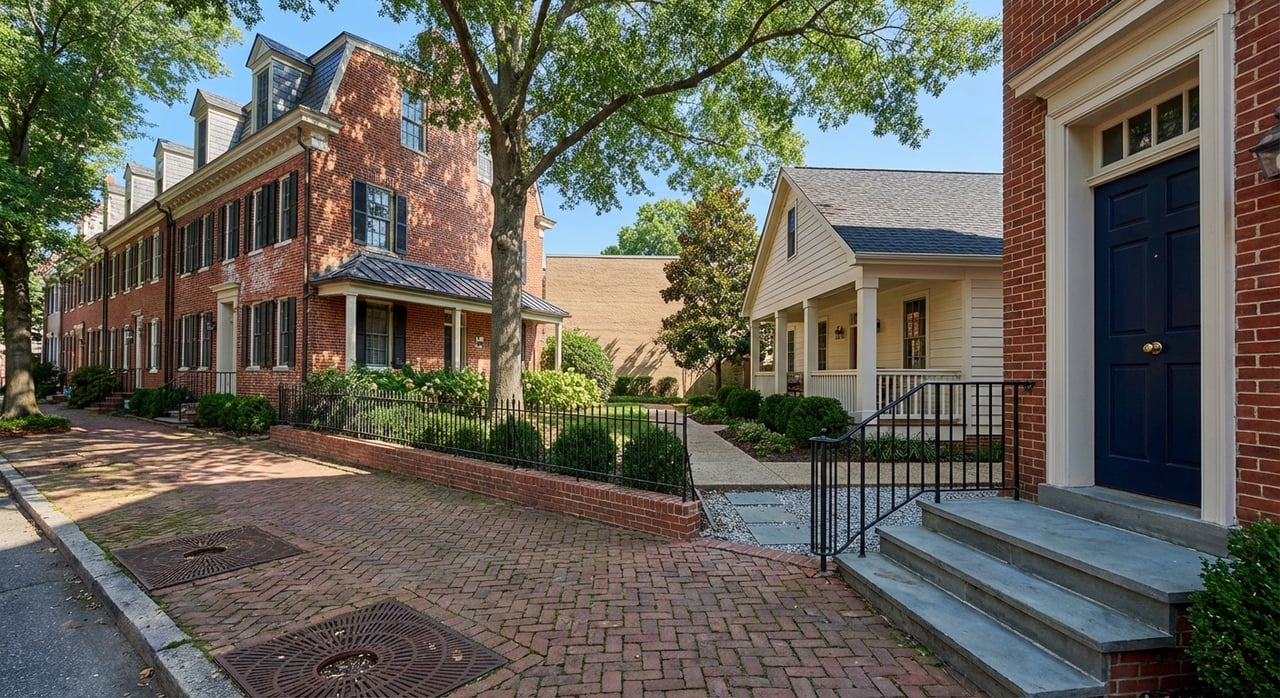
- What you get: Historic brick rowhouses and low-rise condos, high walkability, dining, and retail. Waterfront parks and a lively main street feel.
- Commute vibe: Walk-to-rail access and frequent bus options. You may not need a car daily, though parking can be limited.
- Trade-off: Higher prices per square foot and more visitor activity, especially on weekends.
Carlyle and Eisenhower Valley
- What you get: Newer mixed-use buildings, mid and high-rise condos, amenity-rich apartments, and offices.
- Commute vibe: Close to Metro and major employment areas, with modern buildings and on-site parking in many communities.
- Trade-off: Urban feel with less historic charm, but strong convenience for transit and work.
Potomac Yard
- What you get: Recent development, modern townhomes and condos, and growing retail.
- Commute vibe: Newer Metro access and proximity to emerging job centers nearby.
- Trade-off: Ongoing growth and development can mean construction and evolving amenities.
Del Ray
- What you get: A small-town main street feel with single-family homes and bungalows, plus neighborhood retail.
- Commute vibe: Many residents bus, bike, or drive to nearby Metro stations, then hop the Blue or Yellow line.
- Trade-off: More space than Old Town but typically a longer first or last mile.
Rosemont, Seminary Hill, Parker-Gray
- What you get: Tree-lined residential blocks with a mix of older single-family homes and duplexes.
- Commute vibe: Depending on your address, you may be within walking distance or a short bus ride to rail.
- Trade-off: Quieter streets and more space, with some locations requiring a short drive to stations.
West End, Waynewood, Landmark area
- What you get: More suburban character and larger lots in many pockets.
- Commute vibe: Expect to drive to a park-and-ride, bus connection, or directly into D.C. using I-395 or the Beltway.
- Trade-off: More space and quieter nights, with longer or more variable commute times.
Day-in-the-life commute examples
Metro-first from Old Town
You live a few blocks from King Street and start your day with a quick walk to the station. Trains on the Blue or Yellow line get you to central D.C. in the tens of minutes range for many destinations. In the evening, you stroll home along the waterfront or pick up dinner on King Street. On weekends, you plan around any Metro maintenance and consider biking on the Mount Vernon Trail.
Hybrid driver from the West End
You leave a bit earlier on high-traffic days to capture better drive times on I-395. On others, you drive to a Metro station or use a nearby bus connection to skip the parking hunt downtown. Your monthly budget includes tolls and garage fees, balanced against days you work from home or travel off-peak. The trade-off delivers more interior space and a yard, with a little more planning for commute variables.
Costs, parking, and permits
Housing costs in Alexandria are generally above the national average, with prices varying by neighborhood and property type. Historic areas and the waterfront often command premiums, while suburban pockets can stretch your dollar further. For condos and HOAs, include monthly fees in your budget and review rules that affect parking and rentals. Renters should confirm parking availability and any building-specific charges.
Transit costs depend on your mode and route. Compare Metro fares, commuter rail passes, tolls, and parking. If your employer offers transit benefits, that can shift the math in favor of rail or bus. Keep an eye on construction or service changes that can influence both cost and time.
Many neighborhoods near commercial corridors and in Old Town use residential permit parking. Rules, fees, and zones vary by address. If you plan to own a car, check permit requirements early so you are not surprised on move-in week. Visitors and second vehicles may need separate permits or time-limited options.
Daily living perks for commuters
Walkability is a big draw. Old Town and surrounding corridors place grocery, coffee, dining, and services close at hand. Parks and the Potomac River waterfront give you easy green space, with the Mount Vernon Trail supporting active commutes and weekend rides.
Travelers benefit from proximity to Ronald Reagan Washington National Airport. Getting to DCA by Metro or car is typically quick from much of Alexandria. For nights out or culture, you can stay local or head into D.C. for museums, sports, and shows, then come home to quieter streets.
Smart next steps checklist
- Map your work location and identify the closest Metro stations and bus routes that fit your schedule.
- Test your top commute at rush hour and again off-peak to see door-to-door times.
- Compare monthly costs by mode: fares or passes, tolls, parking, and potential employer transit benefits.
- Learn local parking rules and permit requirements for your target blocks and buildings.
- If schools matter for your move, review current Alexandria City Public Schools boundaries and transportation options.
- Review HOA or condo rules that affect parking, pets, rentals, and move-in logistics.
- Keep tabs on service changes or construction that might affect your route.
- Watch local development updates near stations you plan to use.
- Check for bikeshare docks, scooter zones, and secure bike storage near your building or station.
Thinking of buying or selling in Alexandria?
If you want a clear plan for your move, you deserve an advisor who blends market insight with a hospitality mindset. From neighborhood tours to pricing strategy and professional staging, you get guidance tailored to your goals across Virginia, D.C., and Maryland. Ready to talk through your commute, budget, and timeline? Let’s connect with Rachel Knapp.
FAQs
How long is the Metro commute from Alexandria to downtown D.C.?
- For many central routes, rides from stations like King Street are often in the tens of minutes range, though timing varies by line, transfers, and service changes.
Is driving from Alexandria to the Pentagon or downtown reliable?
- It depends on traffic and whether you use express lanes; I-395, I-495, and U.S. 1 can be congested during peak times, so build in extra time and compare costs with rail.
Which Alexandria neighborhoods are best for walk-to-rail access?
- Old Town, Carlyle, Eisenhower Valley, and parts of Potomac Yard offer strong rail proximity; other areas often use a bus or short drive to reach Metro.
What should I know about parking in Old Town Alexandria?
- Residential permit zones and limited street parking are common near commercial corridors; confirm permit rules, fees, and garage options for your exact address.
Can I use VRE or the water taxi for daily commuting?
- VRE can work well if your office is near Union Station and schedules align; the water taxi is seasonal and better as a supplement than a daily primary mode for most.